Claude Fable 5 vs. Opus 4.8: Which Is the Real Developer Ace?(Benchmarks + Pricing, 2026)
In June 2026, Anthropic shocked the tech world by dropping its first “Mythos-class” model, Claude Fable 5, just 11 days after launching Opus 4.8. Fable 5 instantly stole the spotlight in developer communities with its mind-blowing coding capabilities.
But here is the real question: Which one should you actually use? Is Opus 4.8 enough for your daily workflow, or is Fable 5 truly worth the 2x price premium? Let’s skip the hype and break down their specs, real-world coding performance, and cost-efficiency to help you decide.
Quick Comparison
| Specs & Costs |
Claude Fable 5 |
Claude Opus 4.8 |
| Focus |
Long-horizon, autonomous AI Agents |
Interactive coding & general tasks |
| SWE-Bench (Senior Eng) |
91 / 100(Highly Autonomous) |
63 / 100(Needs Human Help) |
| Input Price (Per M tokens) |
$10 |
Approx. $5 |
| Output Price (Per M tokens) |
$50 |
Approx. $25 |
| Latency |
Slow (Minutes to hours for agent runs) |
Fast (Seconds to minutes) |
| Safety Filter |
High-risk prompts auto-route to Opus 4.8 |
Standard blocking or processing |
| Best For |
Unattended, multi-day workflows |
Live dev sessions & coding chat |
I. Paradigm Split: Autonomous Agents vs. The Ultimate All-Rounder
To choose the right model, you must first understand their foundational design goals and ecosystem placement:
- Claude Opus 4.8 (The Reliable Enterprise Workhorse): Opus 4.8 is the baseline gold standard for long-context reasoning and complex project orchestration. Featuring a 1-million-token context window with near-flawless retrieval (“Needle In A Haystack”), it smoothly navigates multi-step logic and long-term, multi-stage debugging. It remains the dependable production engine for most enterprise workflows today.
- Claude Fable 5 (The Autonomous Architect): Fable 5 represents a generational shift built entirely for long-horizon autonomy. Anthropic designs it to “run independently for multiple days without human intervention.” While keeping the 1M context capacity, it introduces a massive 128K single-turn output limit, backed by profound code self-verification and child-agent orchestration talents.
II. API Pricing: The “Sticker Price” Comparison
Before looking at benchmarks, let’s analyze the raw numbers, as the cost gap heavily influences commercial scalability.
| Pricing Tier |
Claude Opus 4.8 |
Claude Fable 5 |
| Model Tier |
Opus-Class Flagship |
Mythos-Class (First Public Model) |
| API Input / Output (Per M) |
$5 / $25 |
$10 / $50(Exactly 2x) |
| Web Subscription Access |
Included in Claude Pro / Max |
Removed after June 22, 2026(API/Credits only) |
| Context Window |
1 million tokens |
1 million tokens |
-
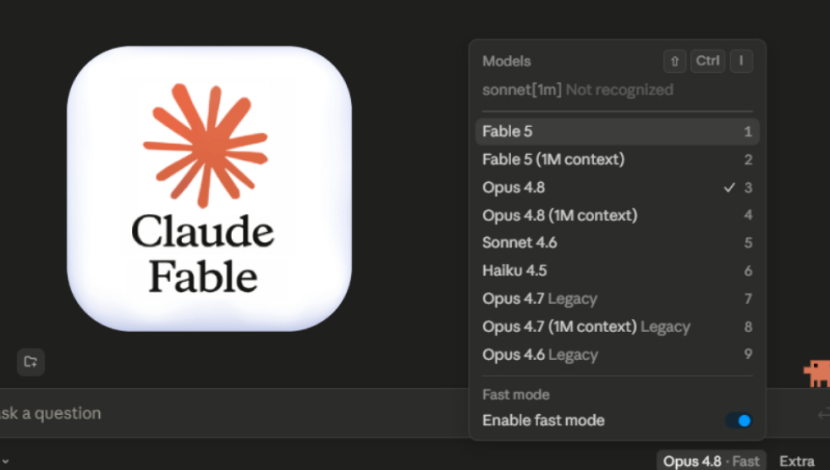
Claude Opus 4.8: At $5/$25, it keeps the classic, predictable pricing model. Subscription users get unfettered access via Pro/Max plans. Furthermore, its new Fast Mode accelerates execution by up to 2.5x while slashing running costs to one-third, offering an incredibly friendly option for budget-conscious developers.
-
Claude Fable 5: As a pioneering Mythos-tier intelligence, its token pricing is exactly double that of Opus. Crucially, starting June 22, 2026, Fable 5 will leave standard web subscription tiers. Users must transition entirely to API calling or standalone usage credits, with no clear timeline on when it will return to standard subscription features.
III. Benchmarks & Real-World Coding Scenarios
Synthetic scores are a great starting point, but mapping those numbers to real development workflows gives us the full picture.
1. Hard Numbers: Who Wins the Benchmarks?
| Test Suite |
Claude Fable 5 |
Claude Opus 4.8 |
What the Gap Means in Production |
| SWE-Bench Pro |
80.3% |
69.2% |
**Fable 5 leads by 11.1%*, demonstrating an engineering autonomy gap. (For context, GPT-5.5 scores ~58.6%)*. |
| FrontierCode Diamond |
29.3% |
13.4% |
More than doubled, proving vastly superior output for production-grade code. |
| Every Senior Eng Benchmark |
91 / 100 |
63 / 100 |
A 45% absolute surge, pushing Fable 5 firmly into the skill bracket of a human senior engineer. |
Fable 5 displays near-complete dominance in complex endeavors involving multi-file refactoring, cross-module debugging, and abstract architectural decisions. However, on isolated, single-file scripts, this gap shrinks drastically — a territory where Opus 4.8 is already exceptional.
2. Hands-On Performance: Where the Differences Lie
- App/Code Dev: Opus 4.8 is your lightning-fast “pair programmer” (3–15s response), perfect for quick bug fixes and unit tests. Fable 5 acts like an independent software engineer. In a test refactoring a 10-file frontend library, Fable 5 rewrote the entire codebase with flawless cross-references in a single turn; Opus required back-and-forth prompt splitting.
- Agent Workflows: Opus 4.8 handles short, 3-5 step tasks flawlessly. Fable 5 easily crushes long-horizon, 10+ step pipelines (scrape ➔ clean ➔ analyze ➔ email) with a >90% success rate, where Opus tends to lose track.
- Data & Analytics: Fable 5 has a stronger contextual grip. When analyzing huge SEO or market data, it spots deep intent patterns and flags hidden logical contradictions that Opus misses.
Opus 4.8’s Edge: It is highly optimized for honesty. Its rate of missing bugs in its own code dropped 4x, meaning it will openly tell you: “I’m not sure about this, please check it.”
IV. Latency vs. Per-Task Costs
Opus 4.8 returns code in 3–15 seconds. Fable 5 takes minutes to hours because it pauses to think, run internal reasoning loops, and check its own work before responding.
Also, because Fable 5 spends more tokens “thinking,” a major task doesn’t just cost 2x more—it often costs 3x to 5x more in reality.
Sonnet 4.6: Average $0.50 / run ➔ Your daily coding default.
Opus 4.8: Average $2.00 / run ➔ Best for tough, interactive bugs.
Fable 5: Average $10.00 / run ➔ Only worth it for full task delegation.
V.Decision Matrix: When to Use Which?
Choose Claude Opus 4.8 If:
- Your workflow is highly interactive: You require immediate feedback, rapid prototyping iterations, or exploratory debugging.
- The task is localized and contained: Single-file bug repairs, short function editing, documentation writing, or quick Pull Request evaluations.
- You haven’t fully defined the project scope: It excels in “let’s figure out this bug together” environments.
- You are cost-sensitive: 80% of daily programming workflows do not touch or benefit from Fable 5’s performance ceiling.
- You operate in restricted fields: Queries regarding cybersecurity or advanced biology are automatically routed to Opus 4.8 anyway; choosing Opus directly eliminates routing delays.
Choose Claude Fable 5 If:
- The task is massive and autonomous: You can write out a highly detailed, comprehensive project brief, deploy it, and walk away for an hour.
- The cost of an error is exceptionally high: If an inaccurate architectural refactor risks halting your engineering team for an entire day, spending extra token budget for a first-time-right outcome is a massive net win.
- The logic requires complex, non-obvious reasoning: Multi-system backend integration, distributed module debugging, or deep first-principles design.
- You can write crisp, ironclad specifications: Fable 5 heavily rewards explicit task parameters. If you cannot accurately define the target parameters before hitting send, choose Opus 4.8 for its faster iteration cycle.
VI. The Missing Piece: Why AI Agents Need High-Quality Proxies
Whether you run Fable 5 or Opus 4.8 for web scraping, AI agents, or automated social media workflows, your biggest bottleneck isn’t the AI—it’s network wind control.
AI agents make high-frequency, automated requests that immediately look like bot activity to target firewalls (Cloudflare, AWS, etc.). The result? Your AI logic is perfect, but your local IP gets slapped with a Captcha or a 403 Forbidden error, killing your long-running task instantly.
This is why serious devs use IPStar Clean Proxy Networks to back up their AI infrastructure:
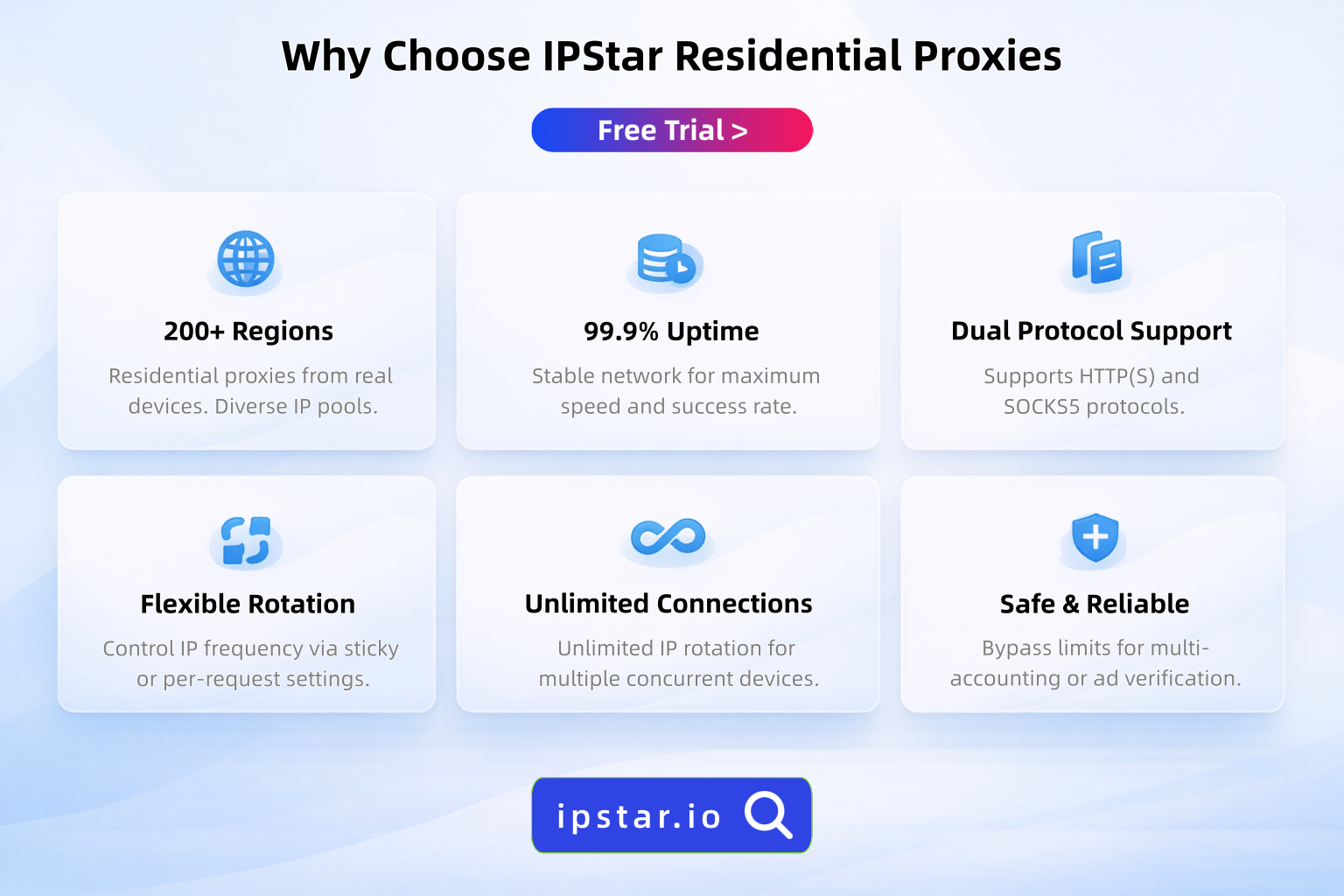
- Dedicated ISP & Residential IPs: Provides a rock-solid network identity, ensuring Fable 5’s long, hour-long agent sessions don’t get dropped due to sudden mid-way IP changes.
- Zero Connection Timeout: Optimized routing prevents network lag from breaking API calls, saving you from paying for wasted, failed tokens.
- Unlimited Concurrency: Natively supports massive multi-threading. When Fable 5 deploys hundreds of sub-agents at once, IPStar ensures your bandwidth never chokes.
Get IPStar Proxies Free Trial
VII. Conclusion
Building a flawless AI automation stack requires a smart AI brain and an unrestricted network pathway. Route your heavy, autonomous jobs to Claude Fable 5, keep your live coding chat on Claude Opus 4.8, and lock down your infrastructure with IPStar. That is the ultimate setup for 2026.